Truck Accidents: What you need to know

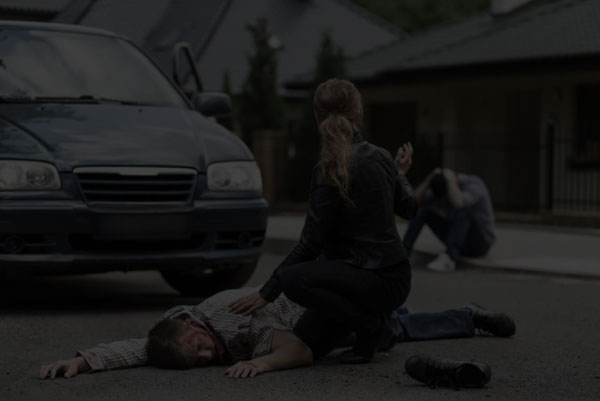
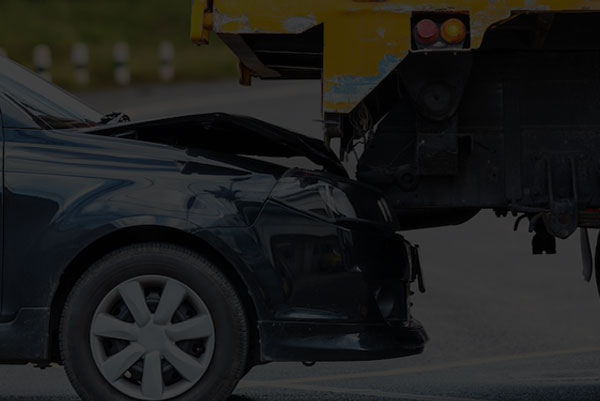
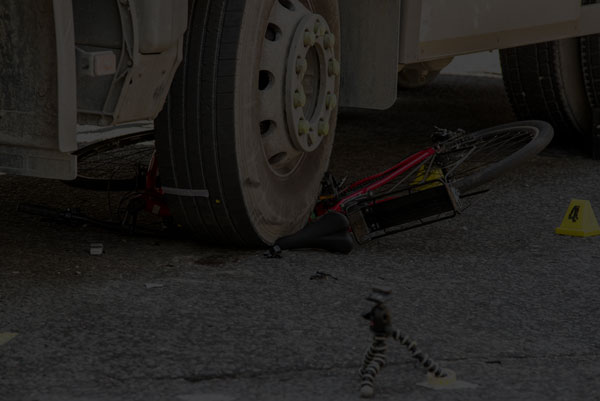
The sheer mass of a truck causes catastrophic injuries to anything in its path, whether it is a car, bicycle, or person.  If you have been involved in a collision with a truck, there are few things you may need to know.  Involving a lawyer early will help guide you through all these complicated issues.

A. What laws Govern?

Aside from the California Vehicle Code, federal laws and regulations will often govern the trucking industry regarding rules and standards that trucking companies and its drivers must meet.  Violation of these rules will often expose the trucking company and its driver to respond.  The trucking industry rules can be found in Title 49 of the Code of Federal Regulations, the Federal Motor Carrier Safety Administration Rules, or the U.S. Department of Transportation.

B. Who Can Be Held Responsible?

There is a myriad of potentially culpable parties when you have been injured in a truck accident.  The most obvious is the truck driver who acted carelessly or recklessly when operating the truck. The trucking company can also be liable for the same failures that the driver did wrong. There an abundance of reasons a truck driver may be responsible including:

  • Use of alcohol or drugs while driving
  • Driver fatigue
  • Distracted driver
  • Speeding
  • Poor training
  • Inadequate or improper maintenance
  • Inadequate or improper inspections
  • Lack of sleep
  • Improper cargo load
  • Failure to comply with drive time/off time rules

Aside from the driver and the trucking company, there could also be a liability for the manufacturer of the vehicle, tires, or other parts that may have caused or contributed to the collision.  Expert analysis and inspection of the truck is crucial to evaluate this issue.  A lawyer typically will ask that the truck and its components be preserved so an inspection can occur.   A lot of information can also be obtained through police reports, photographs, and other documentary evidence.

Even logistic brokers can be held responsible under the non-delegable duty doctrine.  Transportation companies that carry goods for compensation, even if they hire independent contracting trucking companies, cannot delegate away its legal duty under the Motor Carrier Act to an independent contractor to safely operate vehicles on public highways.  Vargas v. FMI, Inc., (2015) 233 Cal.App.4th 638.  The non-delegable duties doctrine prevents a party that owes a duty to others from evading responsibility by a claim to have delegated that duty to an independent contractor hired to do the necessary work.  Seabright Ins. Co. v. US Airways, Inc. (2011) 52 Cal.4th 590, 600-601.  For example, if a national company hires a local company to perform the delivery of goods, and that local company is involved in a truck accident, the national trucking company may be liable to the injured party under this theory.

C. What do I do If I Have Been in a Truck Accident?

Truck accidents are very serious, sometimes fatal, and often require long term medical care and treatment.  If you or a loved one are in a truck accident, the first thing you should do is seek immediate medical treatment.  Calling 911 will assure that a police report is obtained and that you receive the necessary medical attention.  There could be injuries and damages that are not visible that could prove fatal.  The police report will also help you document the physical evidence and witnesses who can help tell the story of what happened. If police are not called, at least obtain the following from the truck driver:

  • Name
  • Address
  • phone number
  • driver’s license
  • the license plate or vehicle and trailer
  • DOT number
  • insurance carrier
  • Insurance policy.

Because trucking companies often fight responsibility, hiring a lawyer to provide guidance and support through litigation is important.  They can help facilitate medical treatment, obtain investigation records, assist with repairs to property damage, talk to witnesses, and hire experts to assist in evaluating who is responsible.  Never try to do this alone.  A lawyer is an invaluable tool that should be part of your team to fight for the justice you deserve when involved in a truck accident.
Property Owner Liability for Foreseeable Criminal Misconduct

Contrary to what most insurance companies and property owners want to believe, a prior crime is only one factor used to evaluate the foreseeability of future crimes that would impose civil liability. An owner or controller of land must take reasonable steps to secure common areas against foreseeable criminal acts of third parties likely to occur absent such precautionary measures. Kentucky Fried Chicken of Cal., Inc. v. Superior Court (1997) 14 Cal.4th 814, 819 & 823–824.  A person or entity who has reason to believe, from observation or experience, that the conduct of another endangers another must try to protect that person.  Delgado v. Trax Bar & Grill (2005) 36 Cal.4th 224, 235-236.  Courts must determine the general character of the event or premise that is conceivable and not just the precise nature or manner of the occurrence.  Isaacs v. Huntington Memorial Hospital, (1985) 38 Cal.3d 112, 126-127.

Foreseeability of third party criminal misconduct is no longer restricted to situations in which prior criminal misconduct has occurred. Such restrictions would preclude “recovery to first-injured victims, and has been held to be inherently unfair and in contravention of public policy.” Gray v. Kircher (1987) 193 Cal.App.3d 1069, 1074. To rule otherwise would remove too many cases from the jury’s consideration simply because a crime had not yet been committed and would prevent the court from determining whether certain conditions exist that could foster criminal misconduct.

It is short-sighted to assume there must be a prior incident to prove foreseeability.  Other factors the courts have examined include:

  • the physical size and layout of the property
  • the location of the property
  • the lighting at the property
  • the hours of operation for the property
  • the characteristics of the surrounding area and neighborhood
  • manner of egress and ingress on the property
  • security on the property

For example, in Onciano, a parking lot that “is largely deserted and automobiles there are left unattended for long periods of time” arguably invite crimes to be committed, particularly at night. Courts continue to recognize that parking structures are dangerous places, and an assessment of the physical characteristics and location of the property must be considered. Sharon P. v. Arman, Ltd., (1999) 21 Cal.4th 1181, 1192.

Instead, foreseeability must be case-by-case under a totality of the circumstances to see if the owner or control of land must take affirmative reasonable steps to secure common areas against criminal acts that could occur without precautionary measures. Ann M. v. Pacific Plaza Shopping Center (1993) 6 Cal.4th 666, 674. Courts focus on what is likely to exist when determining the probability and predictability of crime so a reasonably thoughtful person would take account of it in guiding practical conduct. Onciano v. Golden Palace Restaurant, (1990) 219 Cal.App.3d 385, 392. Clearly, prior crimes place the landowner or occupier on notice of reasonable foreseeability.

A high degree of foreseeability is not required to impose a minimal burden on the landowner. In fact, a “lesser degree of foreseeability is required when the proposed duty involves simple, effective, and easily defined steps.” See Vasquez v. Residential Investments, Inc., (2004) 118 Cal. App. 4th 269, 286. Properly secured gates, fences, and doors can discourage crime at little cost to the landowner.  Equally true, lighting conditions can deter criminal misconduct because it illuminates what perpetrators would not want in plan view. It’s common knowledge that dark public places encourage crime. See Slapin v. Los Angeles International Airport (1976) 65 Cal.App.3d 484, 488.  In addition, visible presence, whether it is through a security guard, attendant or even a video camera, fosters a safer environment and is relatively inexpensive compared to the potential harm victims may suffer without that presence. This presence discourages crime because it can provide potential witnesses. A monitored property is infinitely safer than one that is vacant and unattended. Gomez v. Ticor (1983) 145 Cal.App.3d 622, 633. This is especially true when the landowner derives a commercial benefit from those who use the property. In Onciano, this could be as simple as collecting money to park cars in a lot and then leaving the lot before those cars are retrieved. The landowner should not forsake their duty once they have undertaken a duty to act.

No one factor defines what crimes are foreseeable and therefore imposes a duty on landowners to try to guard against those risks.  Owners and possessors of land therefore must not turn a blind eye to foreseeable criminal misconduct simply because it has not happened yet. To do so would allow landowners to be absolved of liability simply because they did nothing.